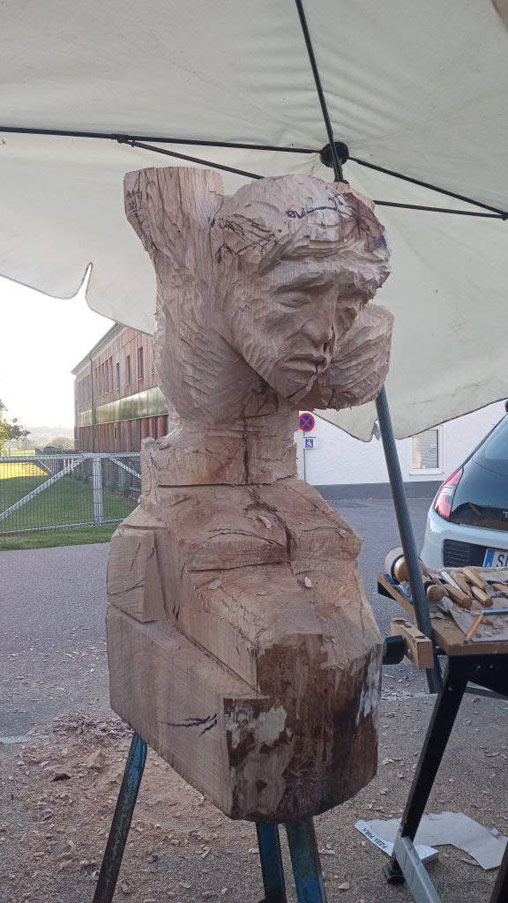
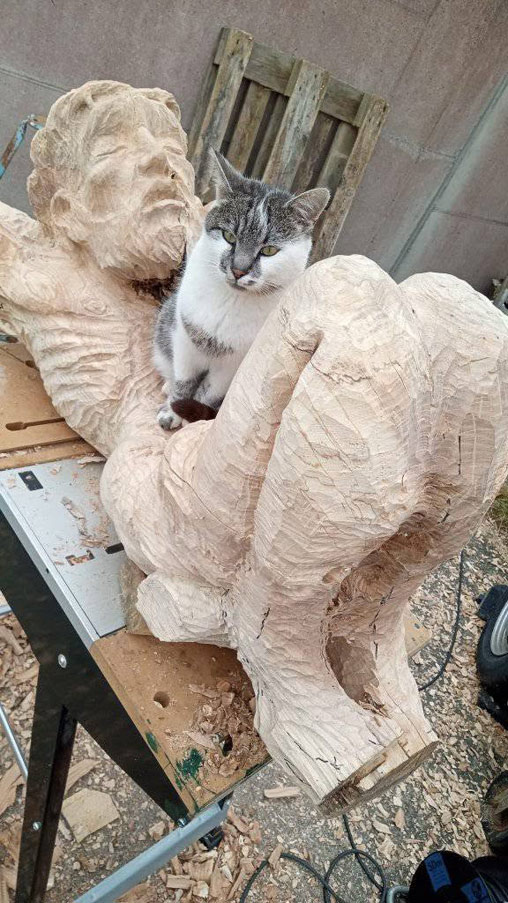
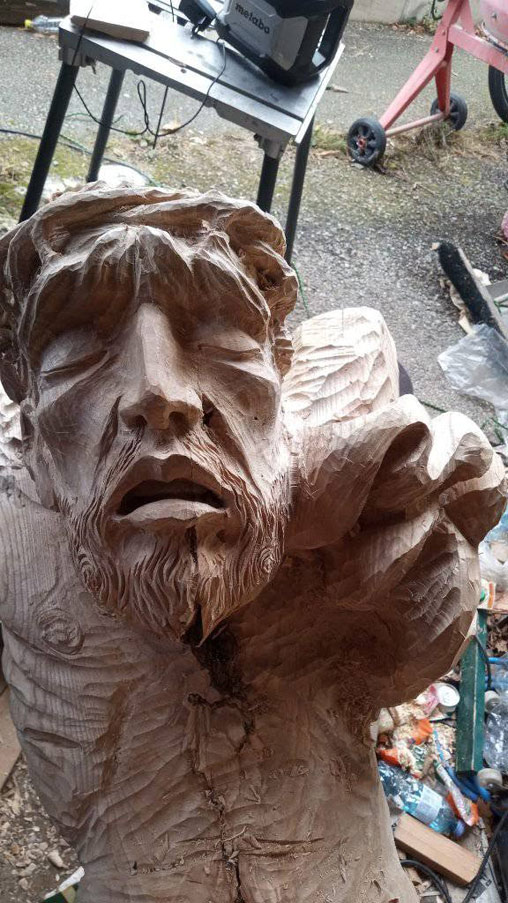
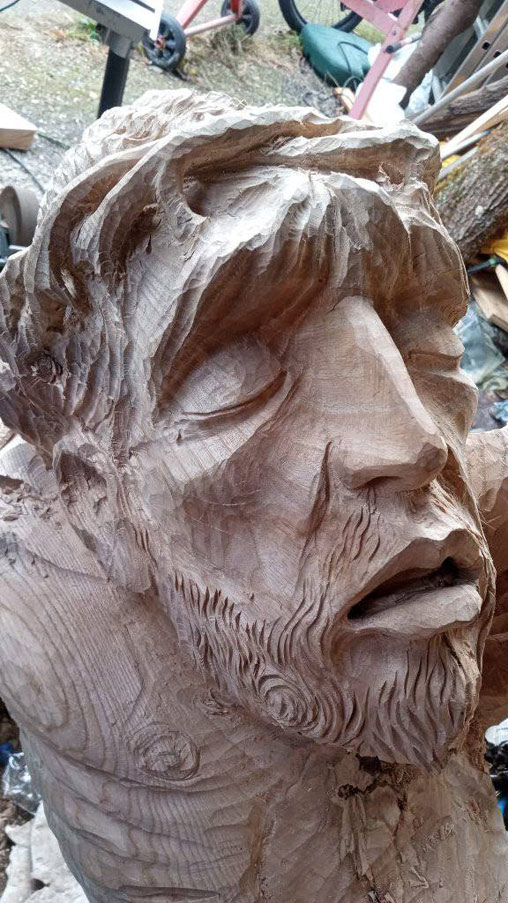
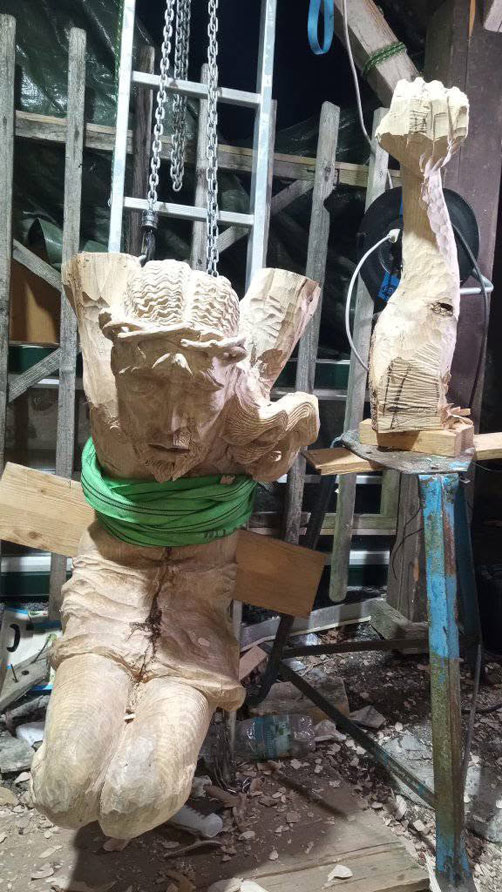
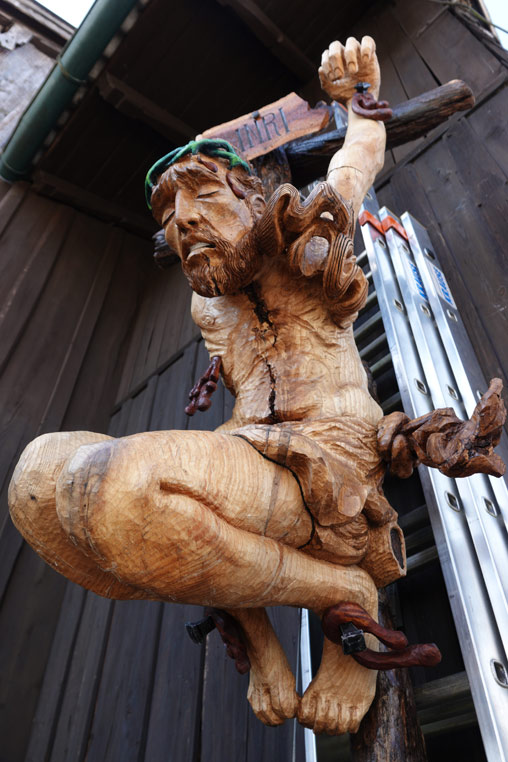
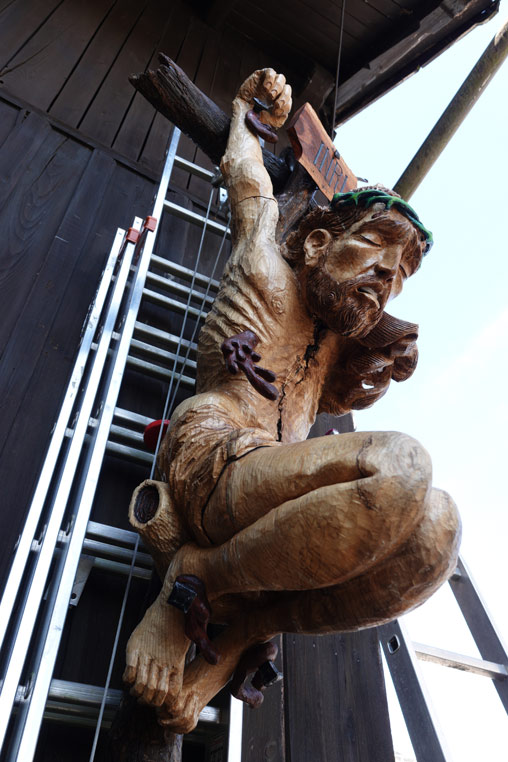
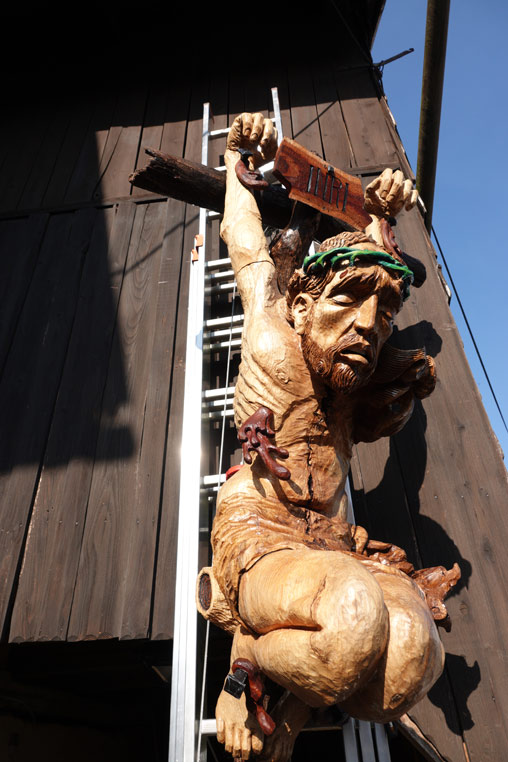
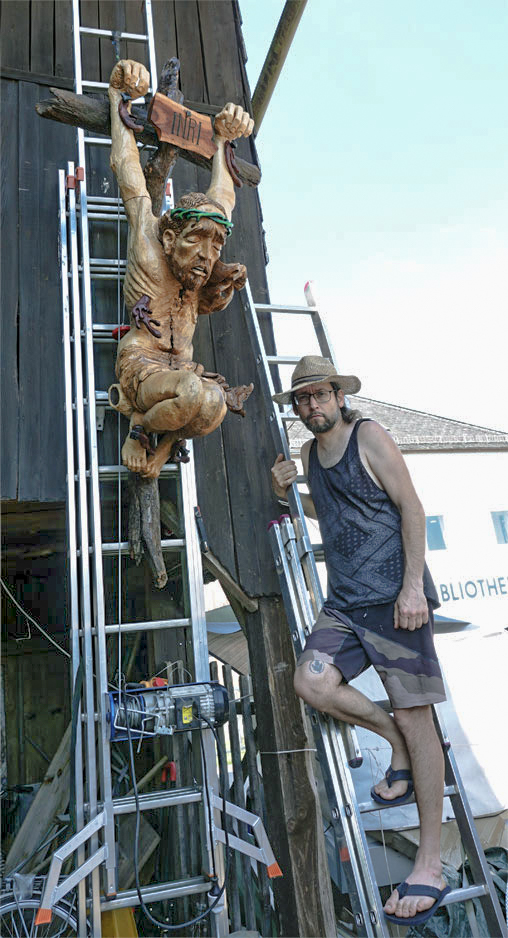
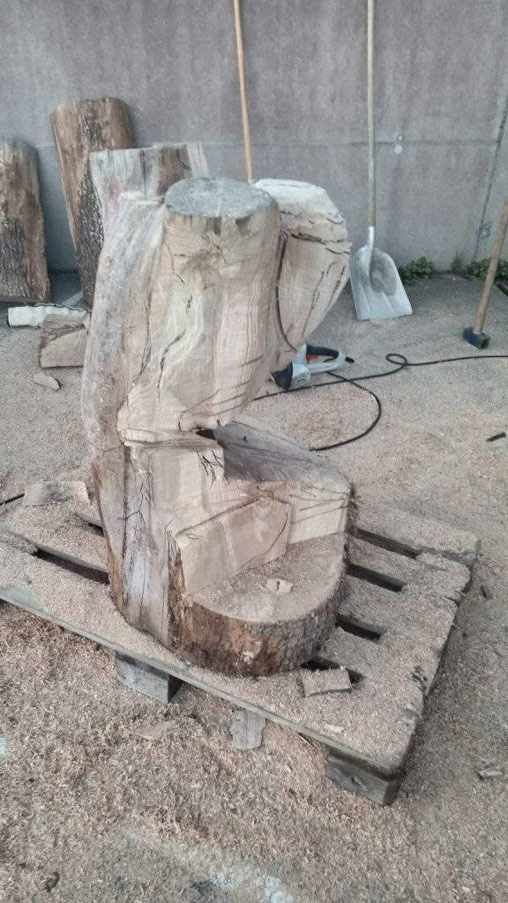
 One Saturday morning, towards the end of summer 2025, I drove to my favorite bakery again. As usual, I was interested in Stefan's garden (he owns Kaisers Hofbäckerei in Irlach, St. Georgen, near Salzburg). In front of the entrance, near the woodpile, I spotted a large ash trunk which, upon closer inspection, resembled the back of the crucified Jesus. I asked Stefan what he intended to do with the trunk and explained my plans. He agreed, and a day or two later, Stefan brought the tree to me with his tractor, and I began separating the hands and torso with a chainsaw. Then the shaping began. By the time winter set in, most of the hands and body were completed.
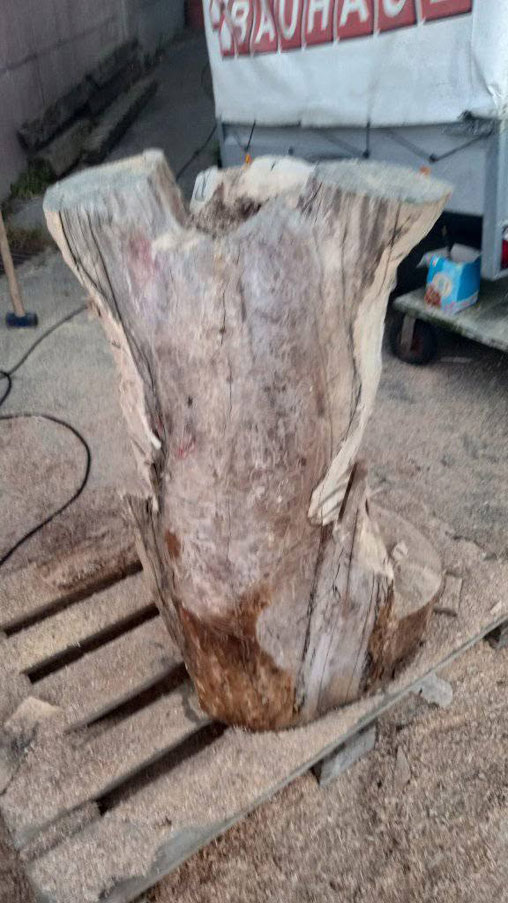
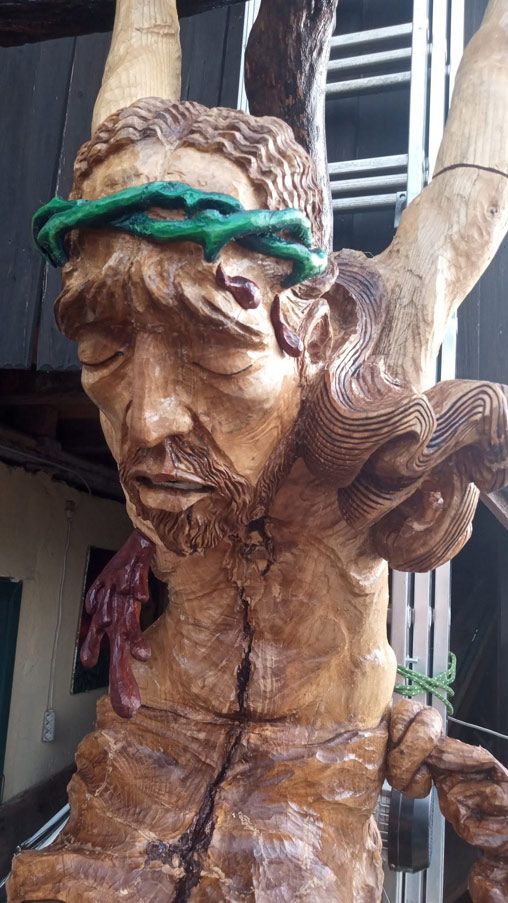
After the winter break, the detailed work began. To give the wood surface color variations, the blood was carved from a different type of wood. Thankfully, I received plum wood from the stock of
Johanns Spatzenegger carpentry .
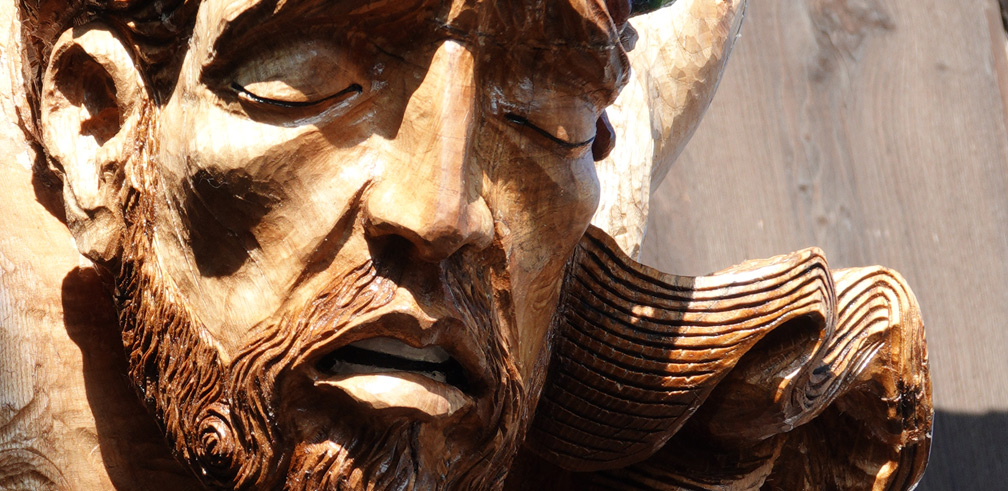
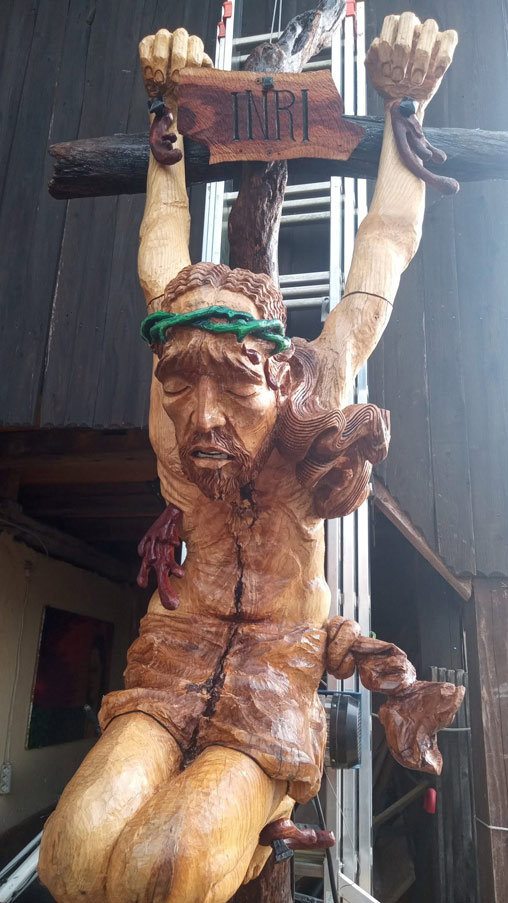
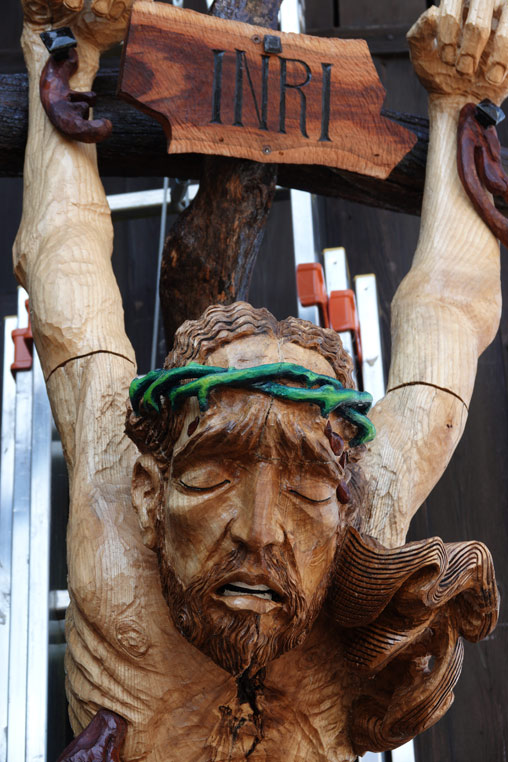
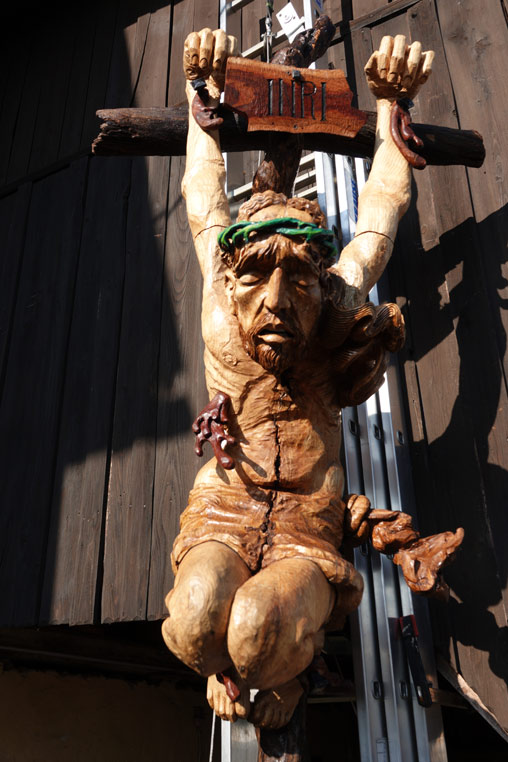
From the outset, it was clear that the expression should be created by carving and not blurred by sanding. The dynamic nature of the wind on Golgotha is also reflected in the hair and clothing.
The depiction of the bent legs represents the most likely Roman method of crucifixion. The green in the crown of thorns symbolizes hope.
The surface was deep-stained and oiled. The cross is made of varnished driftwood, giving the figure a slight counter-curve. The surface of the "INRI" inscription is graphically grooved, creating a different dynamic in the light due to the surface tension. This work bridges the gap between nature, religion, and faith. A rare and unique combination, brought to life above all by the wood.
Information about the exhibition will be available soon.
Please feel free to contact me with any questions.
Wood: Ash, plum and driftwood.
Dimensions: Height 82,6 inch, Width 35,4 inch, Depth 25,1 inch